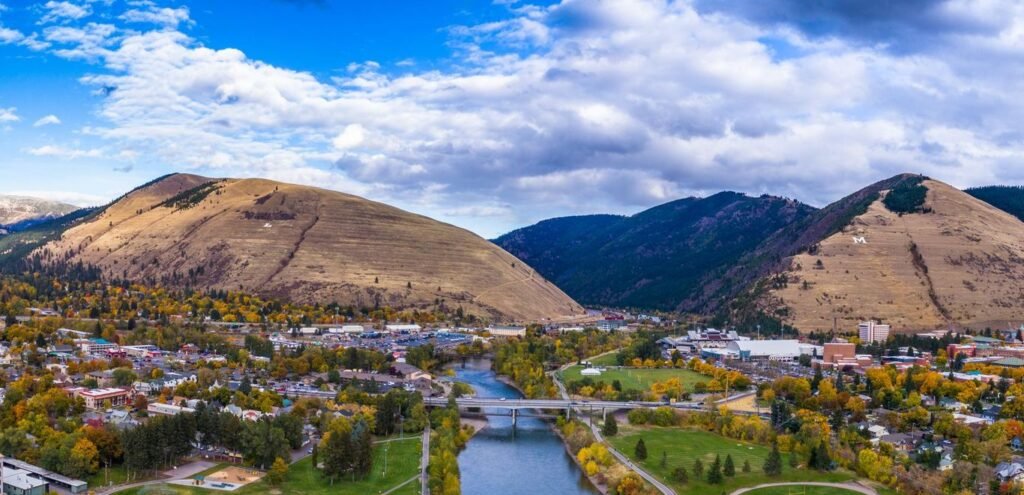
Missoula, Montana
The growth of Missoula, Montana, reflects a steady upward trend driven by economic opportunities, lifestyle appeal and regional migration patterns.
Drivers of increased growth include the University of Montana, healthcare (e.g., St. Patrick Hospital expansions), and tourism tied to natural attractions like the Clark Fork River and nearby mountains. Housing demand has spiked—median home values hit $557,197 by late 2023 (Norada Real Estate)—drawing remote workers and retirees.
Multifamily housing is needed in Missoula, Montana, primarily to address the city’s acute housing shortage, rising costs, and growing population, which have outpaced the supply of affordable homes. Further elaboration below:
Multifamily housing is needed in Missoula, Montana, primarily to address the city’s acute housing shortage, rising costs, and growing population, which have outpaced the supply of affordable homes. Further elaboration below:
- Population. Missoula’s population is expanding faster than its housing stock. Between 2020 and 2023, the city grew from 74,398 to 77,757 (a 4.51% increase), while Missoula County hit 122,868 by 2023, up 12.23% since 2010. This growth, fueled by in-migration from pricier states and local economic opportunities like the University of Montana and healthcare, has strained a market that historically underbuilt. Experts estimated Missoula needed 800 new units annually in the 2020s to keep up, yet the amount of units added annually have fallen far short.
- The issue of affordability. The median home price neared $557,197 by late 2023, while rents also jumped, against a vacancy rate below 1%. Wages haven’t kept pace—median household income is $65,329 leaving many, (especially workers in education, healthcare, and service industries) priced out of single-family homes. Multifamily units offer a cheaper alternative, spreading land and construction costs over more households.
- Supply vs Demand. Zoning restrictions have long choked supply. A 2022 Montana Zoning Atlas report highlighted how Missoula’s codes often ban multifamily development in residential areas or impose lot-size rules that stifle it. The 2023 “Montana Miracle” laws aimed to ease this by mandating multifamily-friendly zoning. Today, Missoula is undergoing a complete Code Reform of the land use and zoning designations in order to support more growth and density to not only address the shortage of supply, but to also ease the entitlement process for developers. The Code Reform is expected to be completed by May 2025.
- Multifamily housing meets the diverse needs of Missoula. Students, seniors, young families and low-income residents needs are met more efficiently than sprawling single-family subdivisions. Initiatives like the Mariposa Commons triplex (2024) and Trinity Apartments (200+ units) underscore efforts to blend affordability with sustainability, yet the pipeline still lags.
Without more multifamily options, Missoula risks losing economic vitality as businesses struggle to attract workers who can’t find housing. Multifamily housing is critical to balance supply with demand, curb costs and keep Missoula livable for all residents.